Ash Handling Equipment: Types, Key Parameters And Selection Criteria
Moving ash out of a boiler, kiln, incinerator or process vessel is rarely a simple screw conveyor job. The material arrives hot, abrasive, dusty and sometimes wet, and it has to be moved continuously or the whole upstream line stops with it. A well chosen ash handling system quietly removes tonnes of residue per day; a poorly specified one generates blocked chutes, premature belt failure, dust leakage and unplanned shutdowns. This guide works through the equipment families available, the parameters that actually decide performance, and the questions to ask a supplier before any purchase order is raised.
The term is used loosely, so it is worth defining the scope. Ash handling is the collection, conveying, dewatering, transport and final disposal of solid residues that are generated by combustion and high temperature process work. Typical sources include coal fired boilers, biomass and waste fired incinerators, cement kilns, steel plant sinter and blast furnace lines, and thermal oxidisers for volatile organic compounds.
The residue usually arrives in one of three physical states. Dry fly ash is fine, light and highly airborne. Bed ash from pulverised fuel is granular but glassy and sharp at the edges when it cools quickly. Wet ash, or bottom ash that has been quenched, is heavy, sticky and corrosive. Each state drives a completely different handling philosophy, which is why a single generic specification almost never works across a site.
Most systems cover four stages: removal from the vessel, short transfer to a central collection point, conditioning or dewatering, and final conveyance to storage, silo or loadout. Each stage has its own duty. Collection equipment sees the highest temperature and the most abrasive material. Storage and loadout equipment sees the lowest duty but the highest uptime expectation, because it must be available whenever the boiler is. Sizing decisions made for the first stage often ignore the fact that the last stage runs on a schedule and not continuously.
Before comparing machines, the material has to be characterised. Four properties dominate every design decision, and they are frequently in conflict with one another.
There is also the chemistry. High alkali and chloride content in waste incineration ash makes the material corrosive to carbon steel, so stainless grades or suitable liners are required for the wetted or hot sections. The correct sequence is therefore always the same: characterise the ash, define the duty cycle, then shortlist the equipment type.
Screw conveyors are the default answer for dry, free flowing ash because they are enclosed, compact and need little floor space. They work well when the material is not sticky and when the distance is modest. Their weak point is the flight and casing wear caused by abrasive ash, and the fact that a seized shaft in a hot, inaccessible chute can shut down the whole boiler house. Troughed belt conveyors take over when the material is light, dusty or fragile and when the run is long, because the belt itself carries the load instead of a rotating screw.
Elevator and chain conveyors are used where vertical lift is required without an enclosed transfer point. They are bulky, need a tall support structure and are less attractive where the plant layout is tight, but they handle hot material and long duty cycles without the fluidised-bed problems of screw conveyors.
Pneumatic systems move ash through a pipe network by entraining it in a carrier gas. Because the material never touches an open belt, dust emission is minimal and the pipework can be routed around obstacles. The trade-off is energy consumption, which is usually the largest operating cost of the system, plus a need for reliable air separation and for compressed air of adequate quality. Vacuum conveying has the opposite profile: lower energy per tonne over short distances, but a limited lifting capability and a greater sensitivity to leaks in the line.
In practice, pneumatic conveying wins in dense urban plants and where dust capture is mandatory. Mechanical conveying usually wins on straight-line routes with long daily running hours and a maintenance team that is comfortable with wear parts.
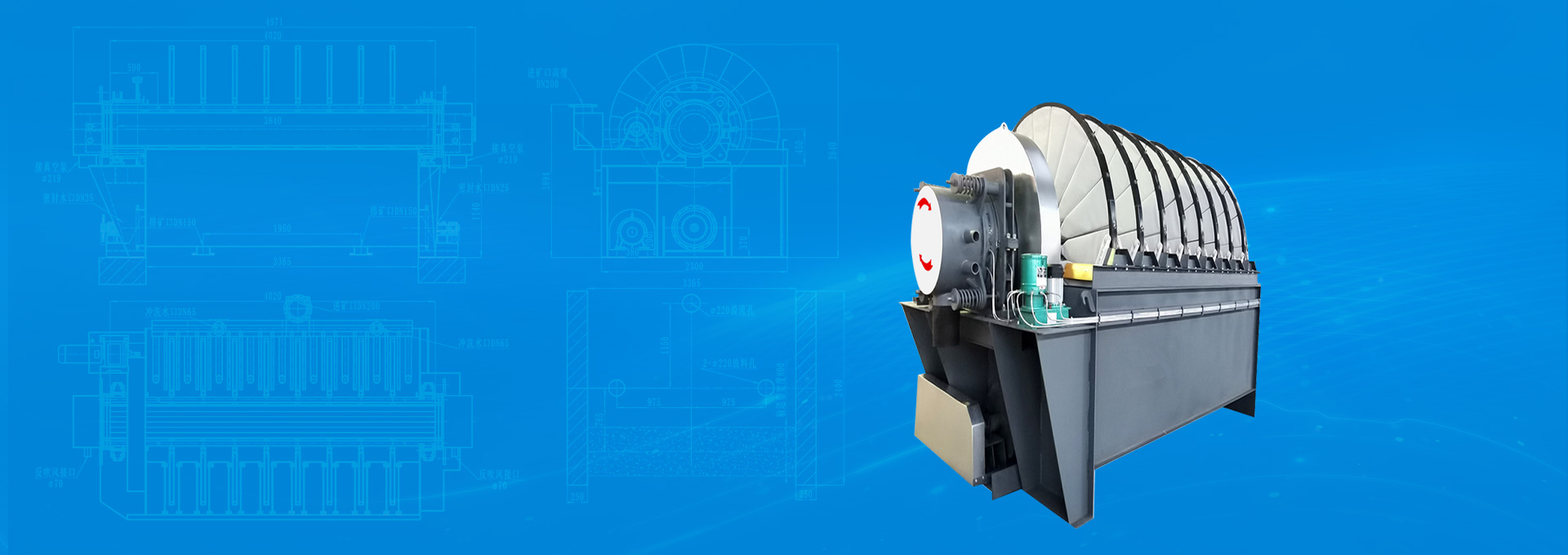
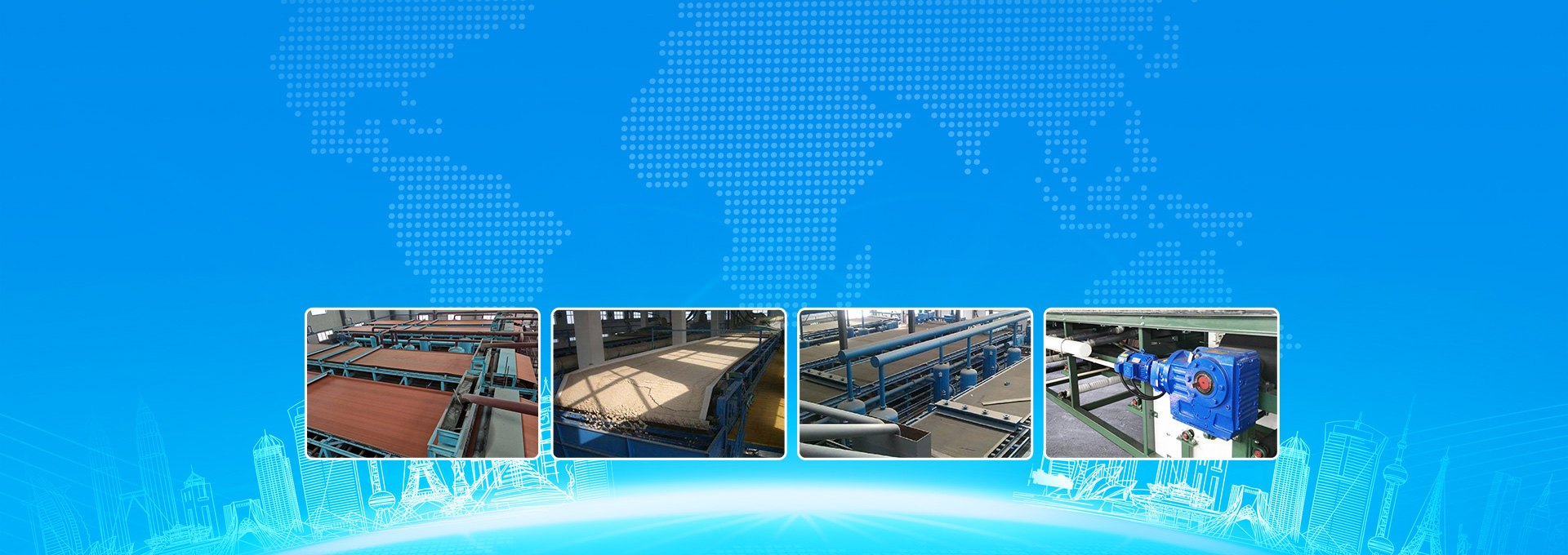
Where ash is discharged into water, the system becomes a slurry handling line rather than a dry handling line. The critical components are the pumps, the piping that must run at a stable velocity to prevent deposition, and the dewatering step that produces a stackable cake. Rotary vacuum filters and belt filter presses are widely used for this duty: the belt filter press is particularly effective where a high volume of wet ash or sludge must be brought to a low residual moisture content before disposal, since it combines a continuous filtration cycle with automatic cake discharge and wash stages.
Vacuum filtration also has a role in dry ash applications. A vacuum filter removes fine fly ash from a gas stream before the gas is released, which protects downstream fans, ducts and the environment. In that configuration the ash arrives as a damp filter cake and still needs a mechanical transfer stage afterwards, so the two disciplines are usually combined in one line.
When equipment suppliers quote against the same duty, several technical parameters separate a workable proposal from a well engineered one. Compare these line by line.
| Parameter | Why it matters | Questions to ask |
|---|---|---|
| Design throughput | Sets the size of every downstream element | Is the figure continuous, peak or intermittent? |
| Ash temperature and moisture | Determines material grade and sealing | At what point in the line is each value measured? |
| Abrasiveness index | Drives wear part selection and cost | Which parts are consumable, and what is the interval? |
| Installed power | Dominates operating cost | What is the specific energy consumption per tonne? |
| Dust emission control | Often a permit condition | At which point is capture achieved and how is it measured? |
| Availability target | Defines redundancy needs | Is a standby route provided for critical transfers? |
The table below summarises the practical trade-off between the four configurations most often offered for ash moving. Figures are indicative engineering experience rather than guarantees, and final selection always depends on the ash characterisation.
| Configuration | Best suited to | Main advantage | Main limitation |
|---|---|---|---|
| Enclosed screw conveyor | Dry, free flowing ash at low to moderate temperature | Compact and fully enclosed | Wear on flights and casing with abrasive material |
| Troughed belt conveyor | Light, dusty ash over longer distances | High capacity with low product degradation | Enclosure and dust extraction required |
| Pneumatic conveying | Dusty ash where emission control dominates | No open transfer points, flexible routing | Highest energy use and air quality dependency |
| Slurry plus filtration | Wet ash or quenched bottom ash | Handles sticky and high moisture material | Requires pumping, thickening and cake handling |
Material selection is where most ash handling problems are actually created. The wrong grade may survive a week of commissioning and then fail repeatedly in service. Carbon steel is adequate for cool, dry, non-chloridic ash. Abrasion resistant plate is normally justified at impact points, inlets and transition sections where ash falls or changes direction. Stainless steel is specified where chlorides or alkalis are present, especially on wetted or slurry contact surfaces, where corrosion will proceed unnoticed until a hole appears in a chute liner.
Sealing and flexible connections deserve the same attention. Rubber wear curtains, skirt boards and inflatable seals are widely used to contain dust at loading points, and the elastomer grade has to survive both the temperature and the abrasion. A soft general purpose rubber that performs well on the belt will harden and crack in a 90 degree C chute. This is where a proper temperature and abrasion screening of every polymer component matters more than the headline price of the machine.
An ash handling line is rarely an isolated asset. It normally sits between a gas-side filtration stage and a downstream storage or loadout stage, and the interfaces determine the reliability of the whole plant. The gas-side filter handles the largest dust load and must be able to discharge its collected cake into the transfer system without creating a pressure surge. The storage stage, usually a silo or a bunker, must be sized for the maximum outage of the upstream line, not just the average consumption.
Where fine ash is stored, a common and effective arrangement is to combine pneumatic conveying into the silo with a mechanical route to a loadout point, so that a single blocked element does not stop the plant. Level detection in the silo should be independent of the conveying system, and dust suppression or extraction at the loadout point completes the dust control chain.
Engineers often apply a sizing factor to the average hourly rate to obtain a design figure, then apply the same factor to the peak rate. The two factors are not interchangeable. The average rate should carry a modest allowance for normal variability, while the peak rate reflects a realistic upset, such as a cleaning cycle or an extended trip of the upstream process. Designing every element for the absolute peak is wasteful; designing for the average is the most common cause of a blocked transfer station.
Screw conveyors in particular are derated when the duty is hot, abrasive or continuous, because the flights operate at the surface of the trough rather than in a free mass of material. The derating factor depends on the material and the screw design, and it should be stated explicitly in the proposal. The same applies to pumps in slurry lines: pump selection is made on the required flow and head at the actual solids concentration, not on the clean water curve.
Ash handling equipment should be selected from the ash characterisation outwards, not from a catalogue inward. Characterise temperature, moisture, abrasiveness and chemistry first, decide whether the duty is dry, wet or slurry based, and then compare conveyor, pneumatic and filtration options against a consistent set of parameters: throughput, power, wear part exposure, emission control and availability. Attention to wear materials, sealing details, bypass routing and downstream storage capacity is what separates a system that runs for years from one that repeatedly fails in its first year.